
Rooted in Place
Rooted in Place is a speculative architectural experiment exploring bio-fabrication. The project investigates whether living plant root systems can be guided by 3D-printed scaffolds to create architectural components (testing whether geometry can direct biology, and imagining what that might mean for how we build).

Concept
What if buildings could grow? Instead of relying solely on inert, energy-intensive materials, this project explores a symbiotic alternative. The goal wasn't to produce a market-ready material, but to test whether roots can actually be guided by geometry (and to make the adaptive behavior of root systems a visible part of the design conversation).
Design & Fabrication
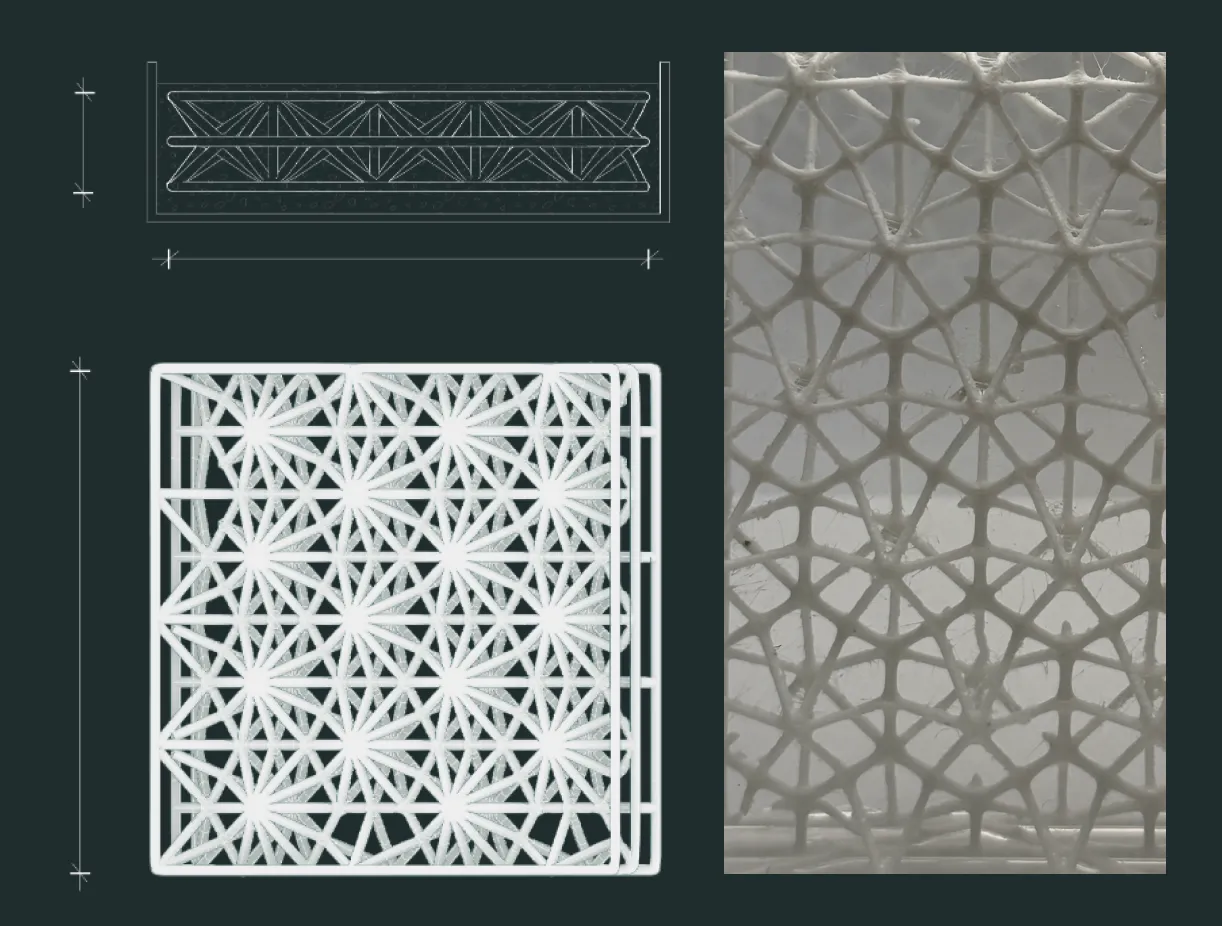
A series of modular lattices were designed in Rhinoceros 3D and 3D-printed in PLA, systematically varying porosity, channel size, and layer height to test how geometry influences root path. Rapid iteration on the printer allowed dozens of variations.
Cultivation & Findings
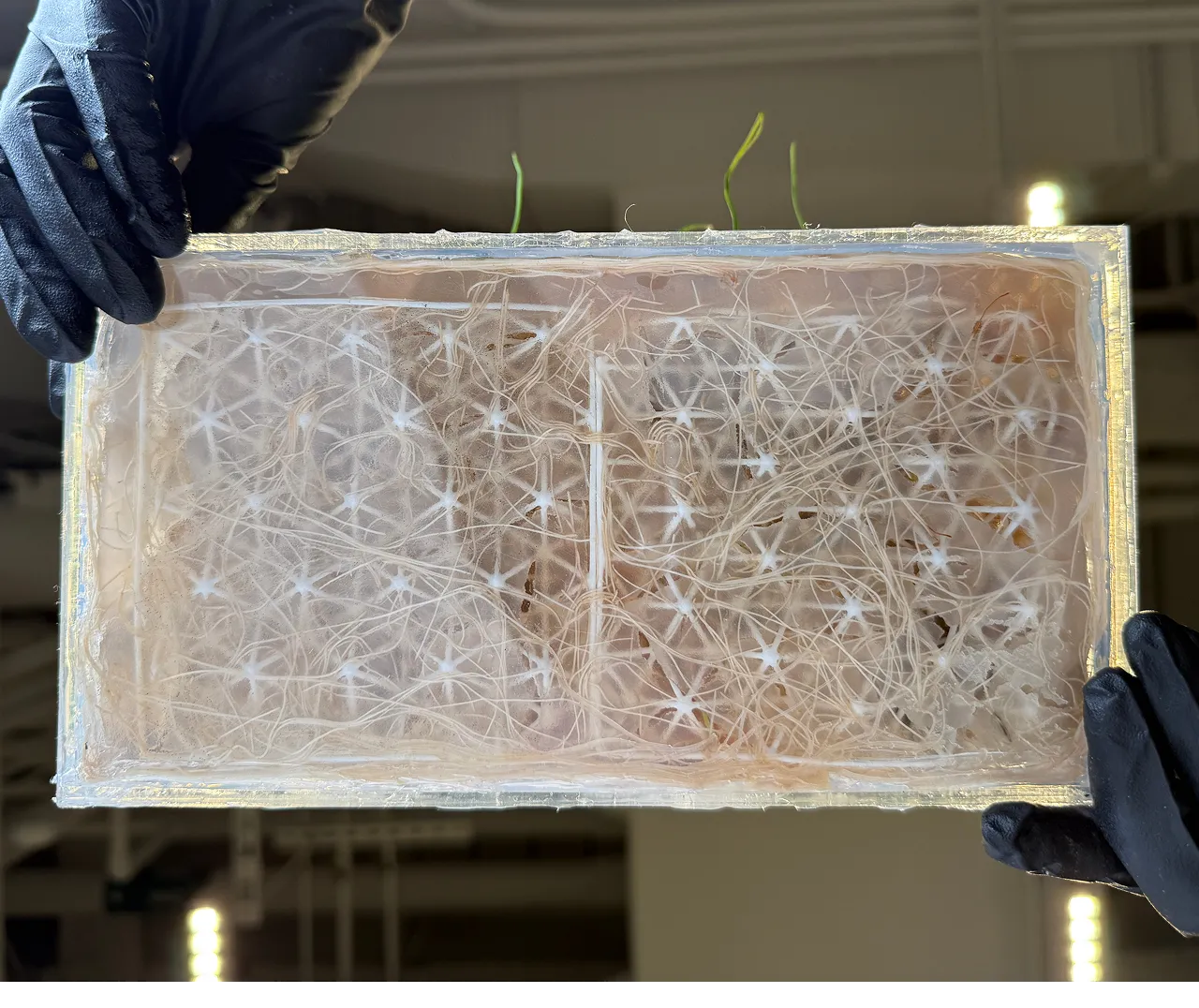
Controlled growth experiments used mung beans and wheatgrass, chosen for their distinct root structures. Seeds were cultivated within the scaffolds in a transparent agar medium, enabling direct observation of how roots interacted with printed geometries over time.
Wheatgrass proved particularly effective: its fibrous root system created a dense, interwoven mat that successfully bound multiple scaffold tiles into a single cohesive unit. No structural testing was performed, but the result demonstrates a compelling possibility for living joinery and serves as a tangible provocation for how we might partner with living systems in design.
Systems-Level Analysis

A systems map traces the lifecycle of conventional building materials against the proposed bio-fabrication workflow, highlighting where plant-based methods could reduce waste, sequester carbon, and create a more symbiotic relationship between built and natural environments.