Hikarigami
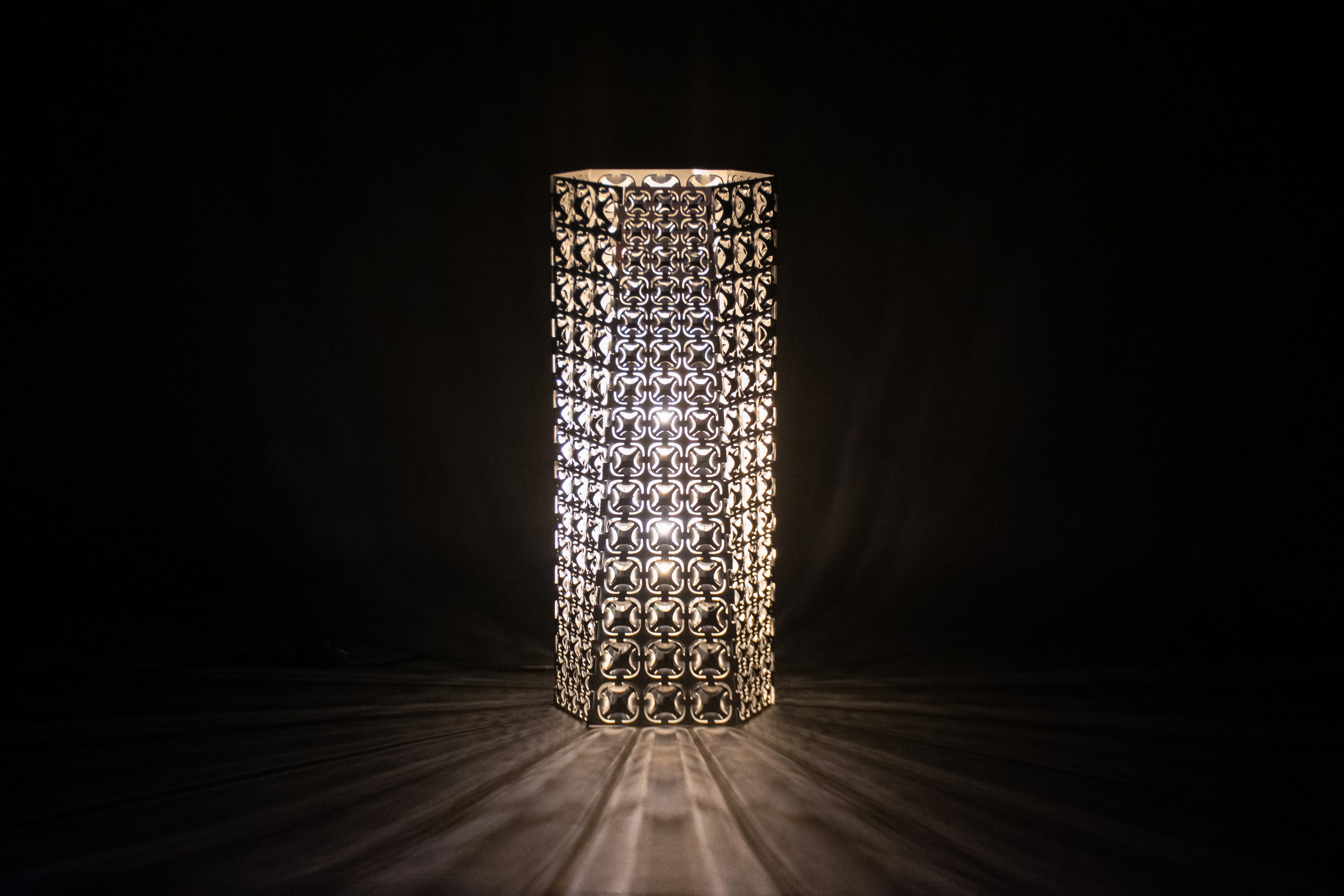
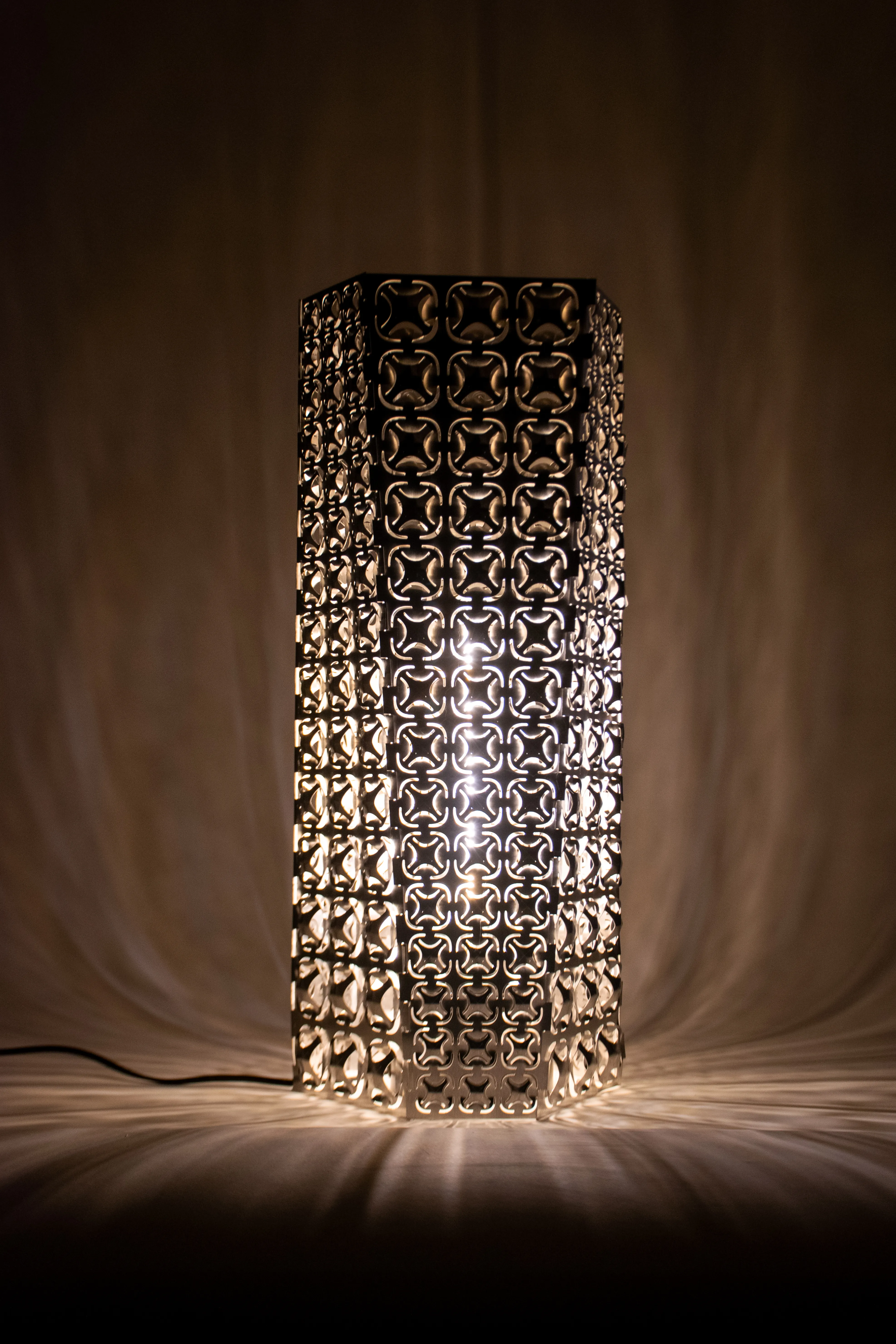
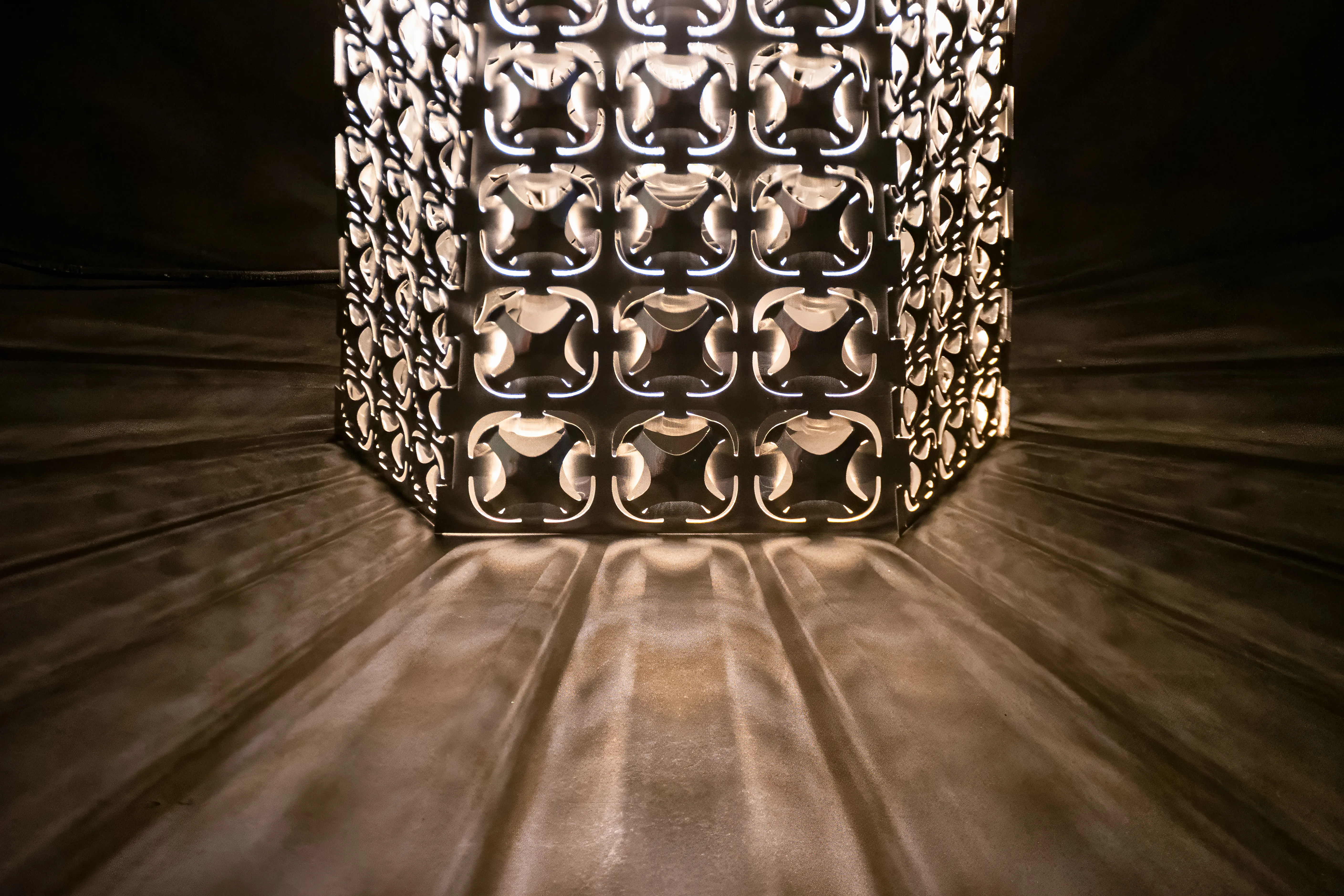
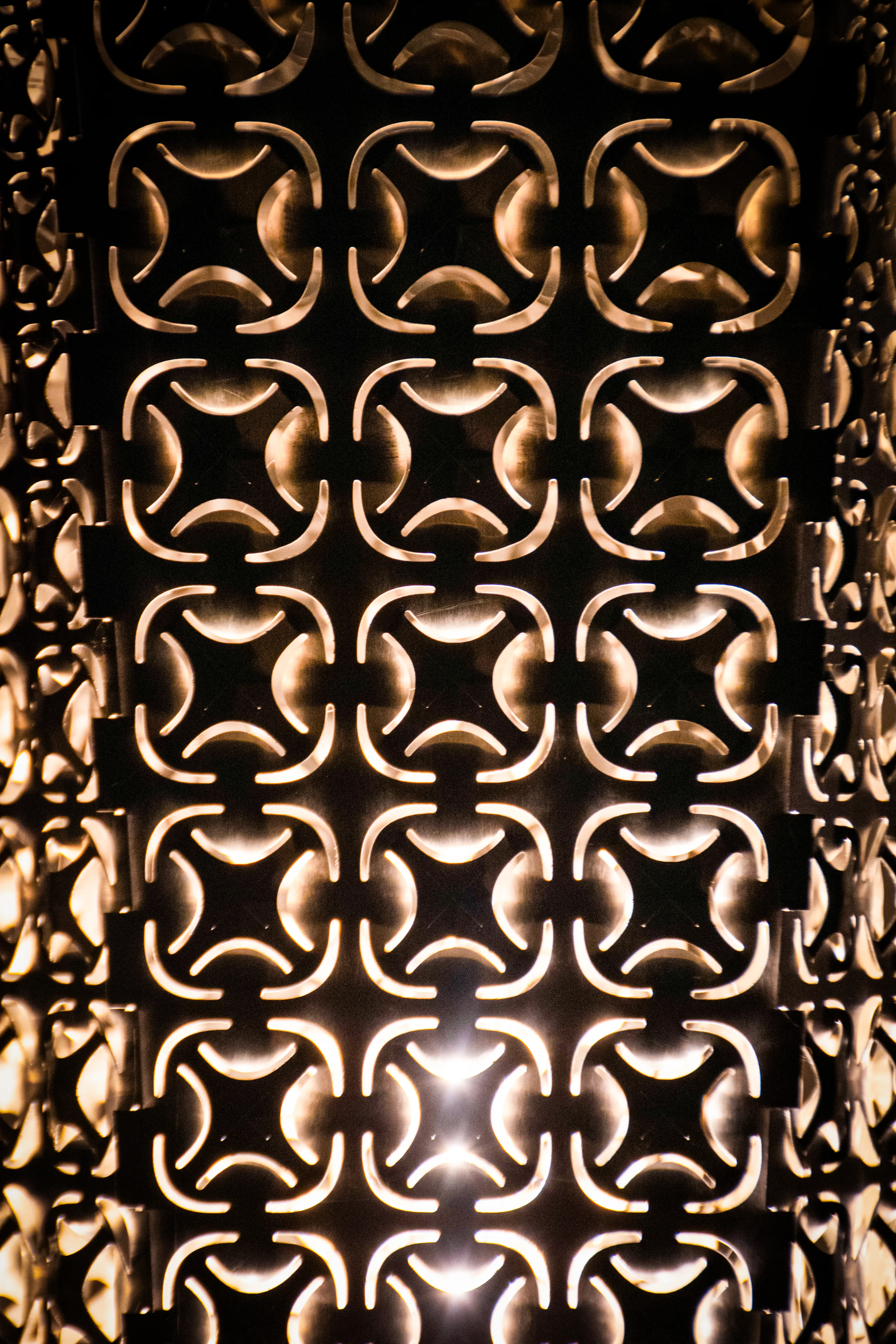
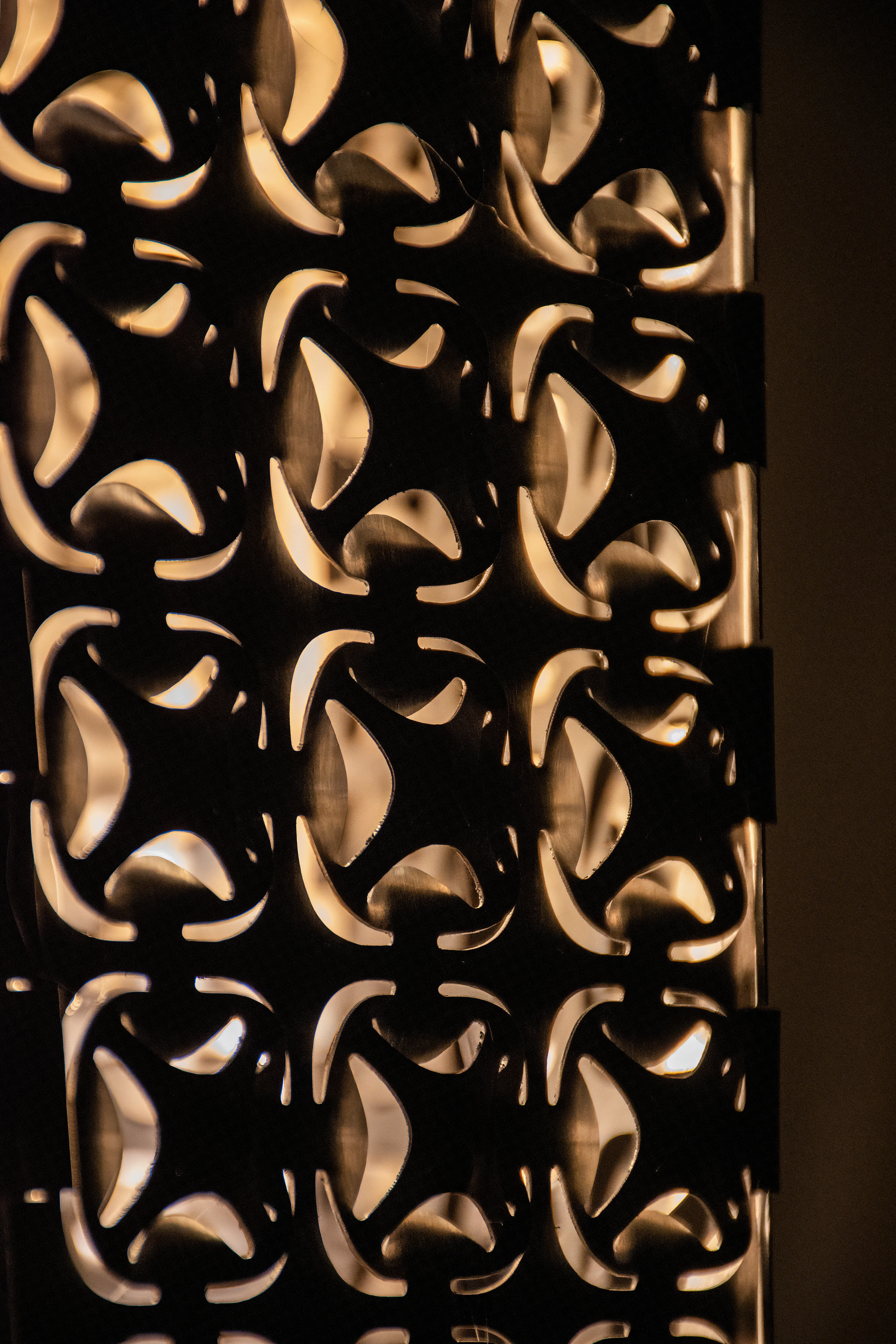
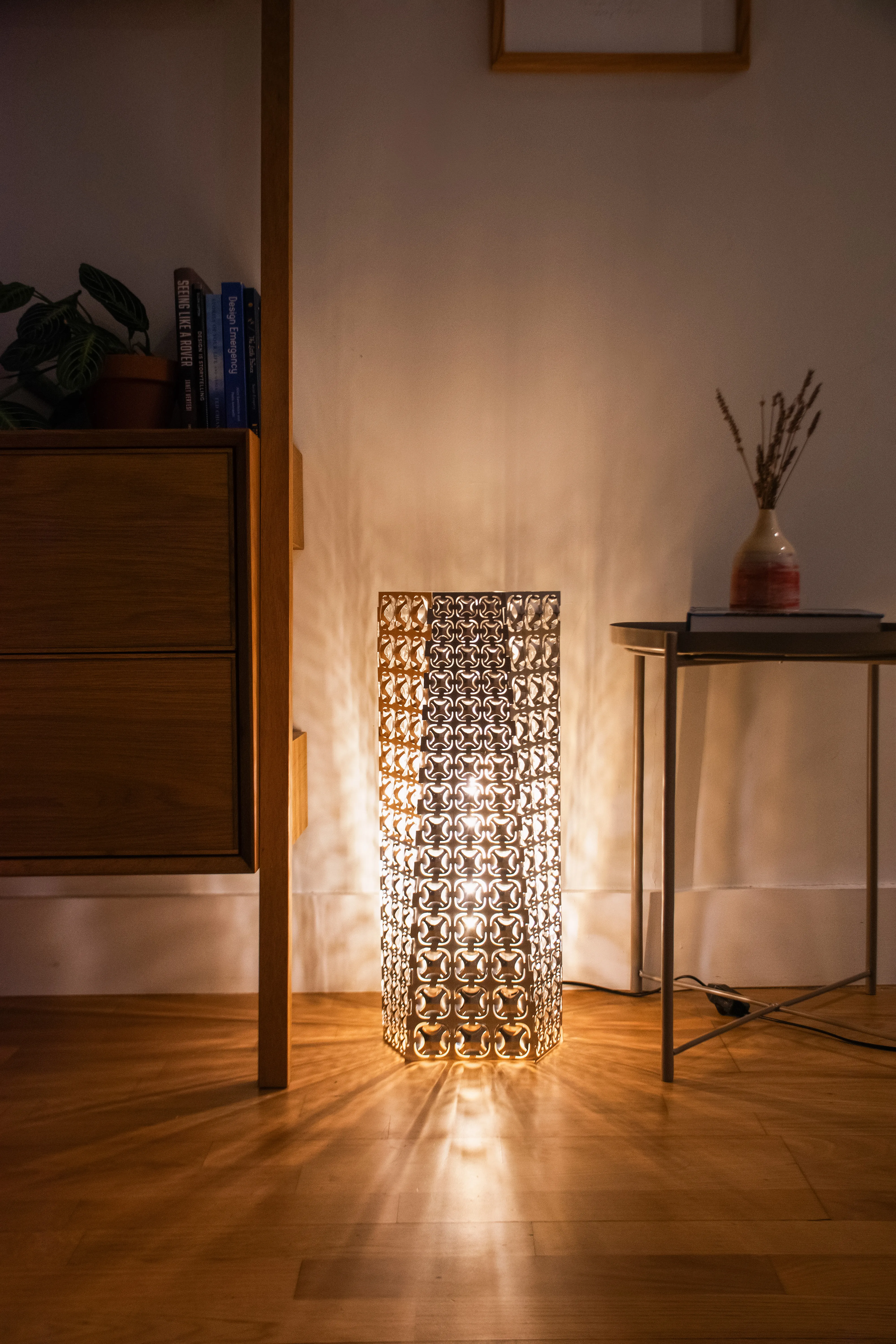
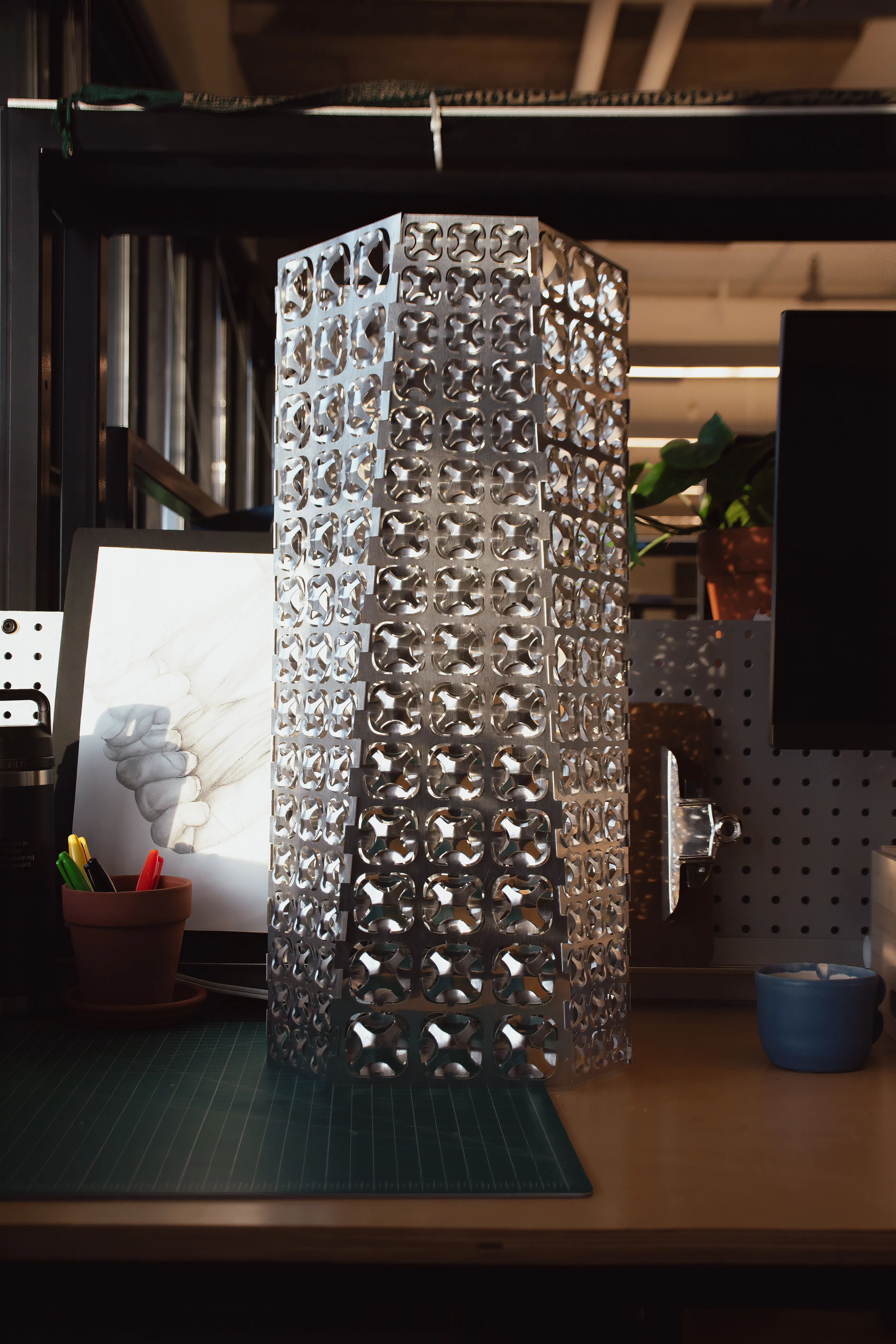
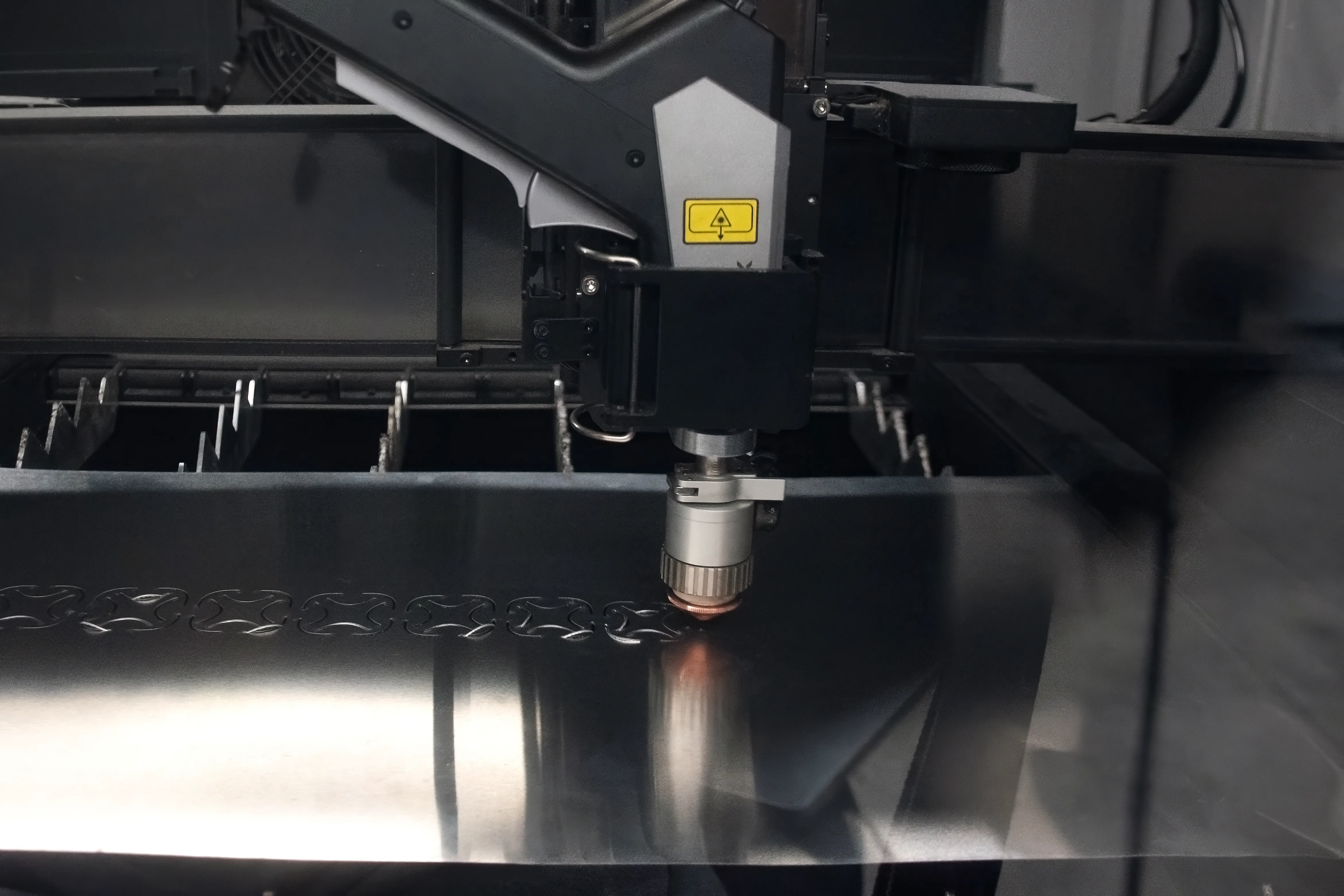
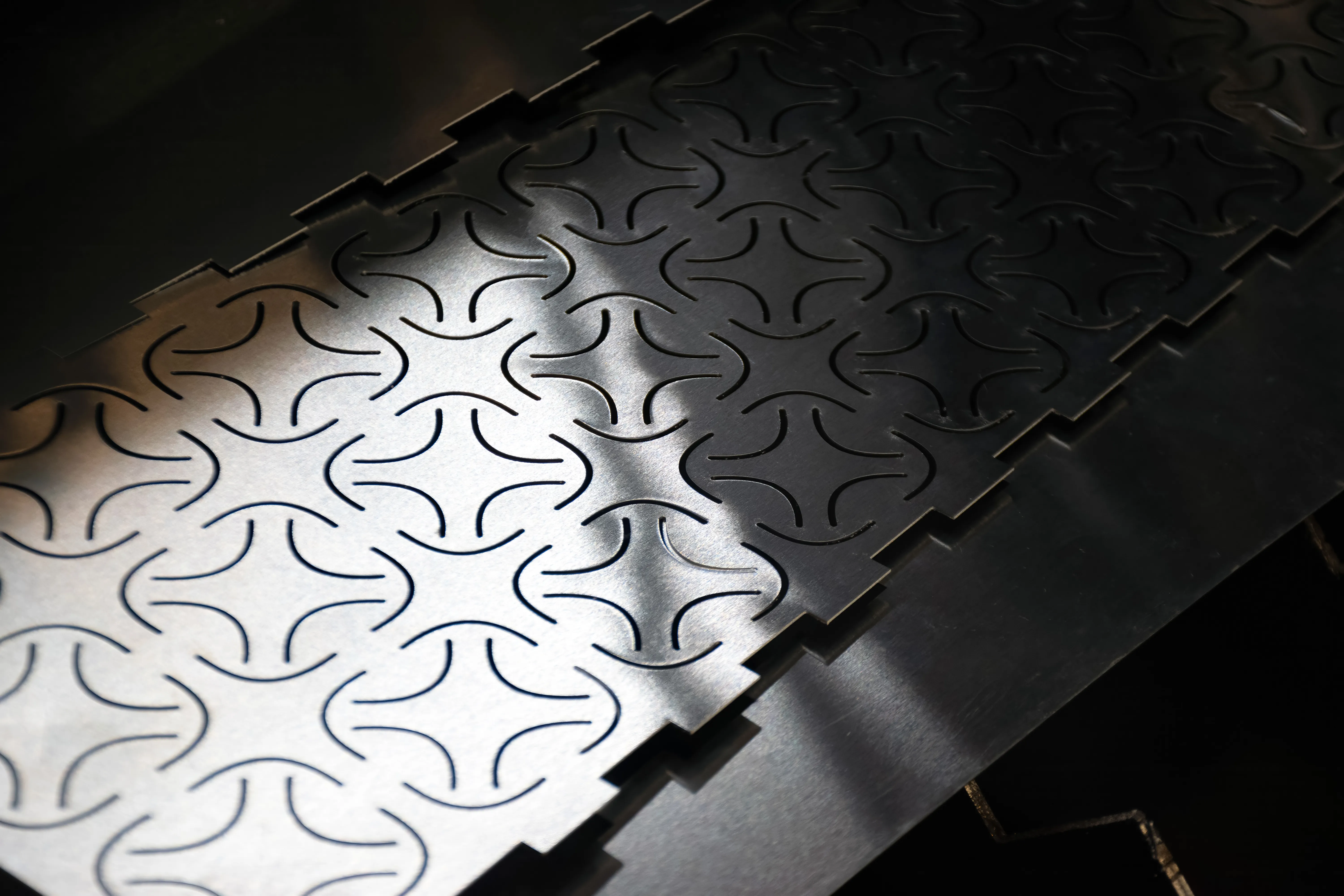
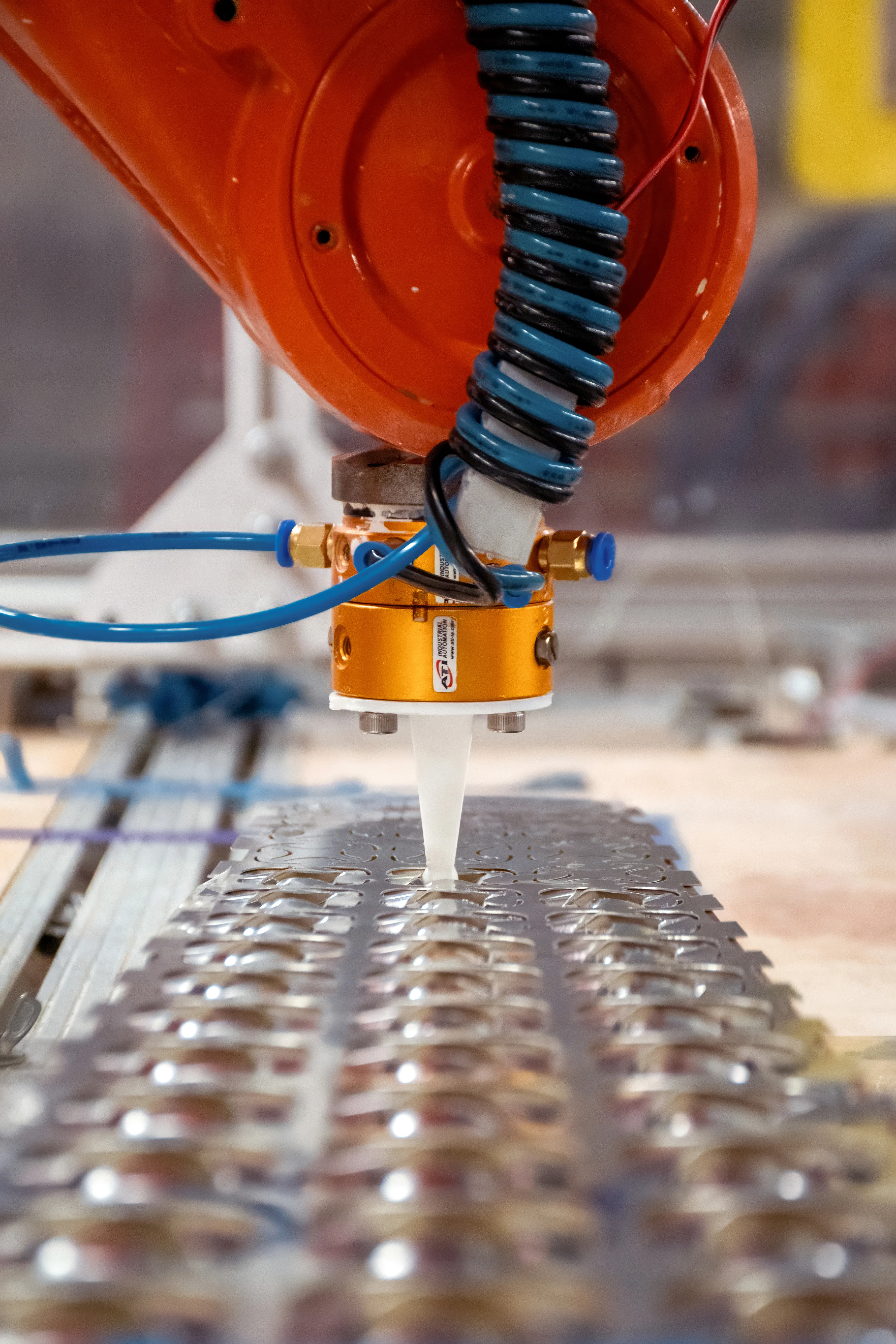
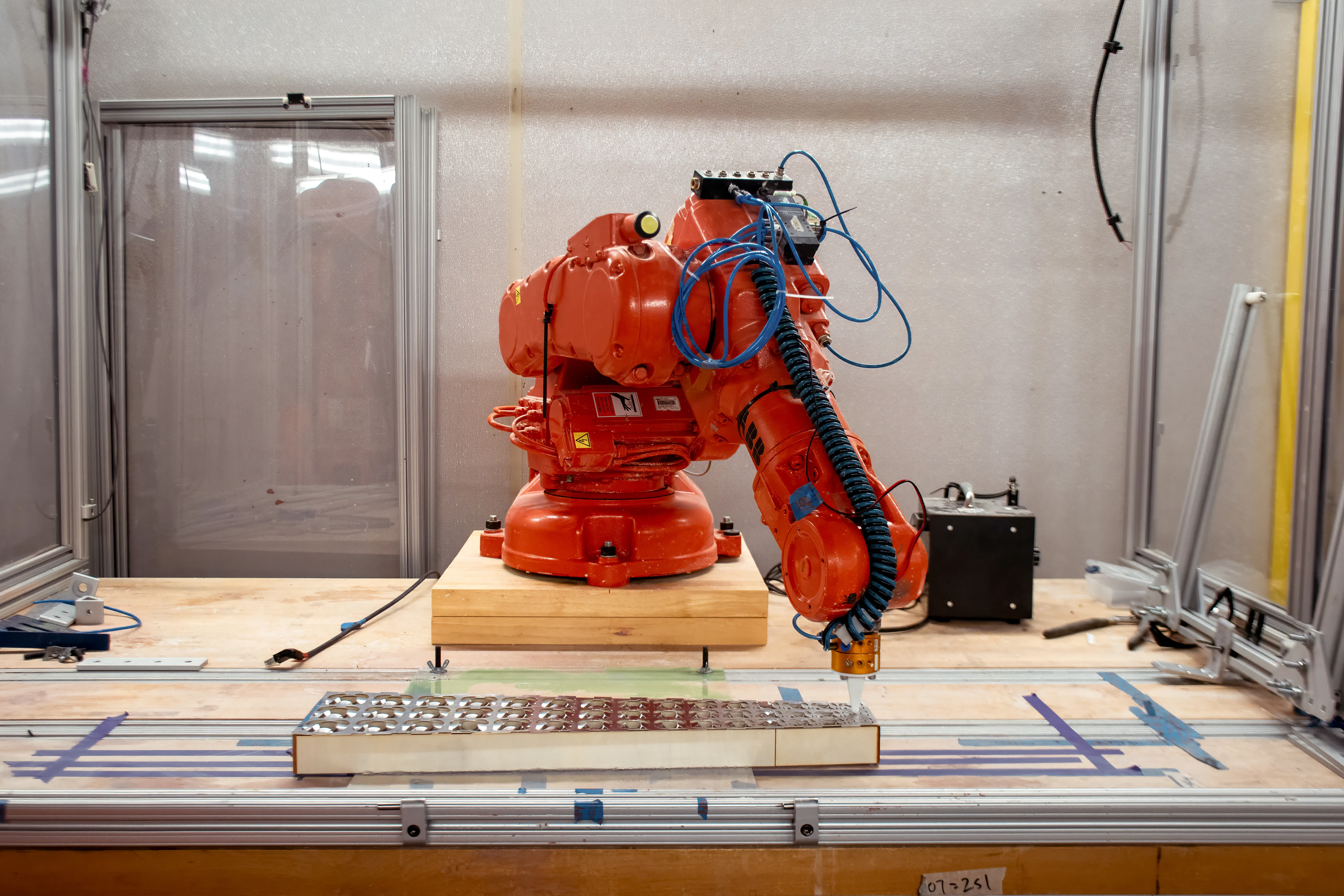
Hikarigami, from the Japanese hikari (light) and kirigami (paper cutting), is a luminaire that merges computational design with robotic fabrication. The process starts with flat aluminum sheets. A laser cuts lattice patterns derived from computational simulations, then an ABB robotic arm pushes the planar material into spatial form by single-point incremental forming, with no molds and no conventional tooling. Lattice density and geometry vary across the six panels, which changes how the aluminum bends and how it refracts what passes through it. Lit from inside, the panels work as diffuser and lens at once and throw shifting caustics across the wall. The robot does the forming; the simulation decides how deep each cell goes.
The robotic forming process. Each cell is individually deformed to precise depths.