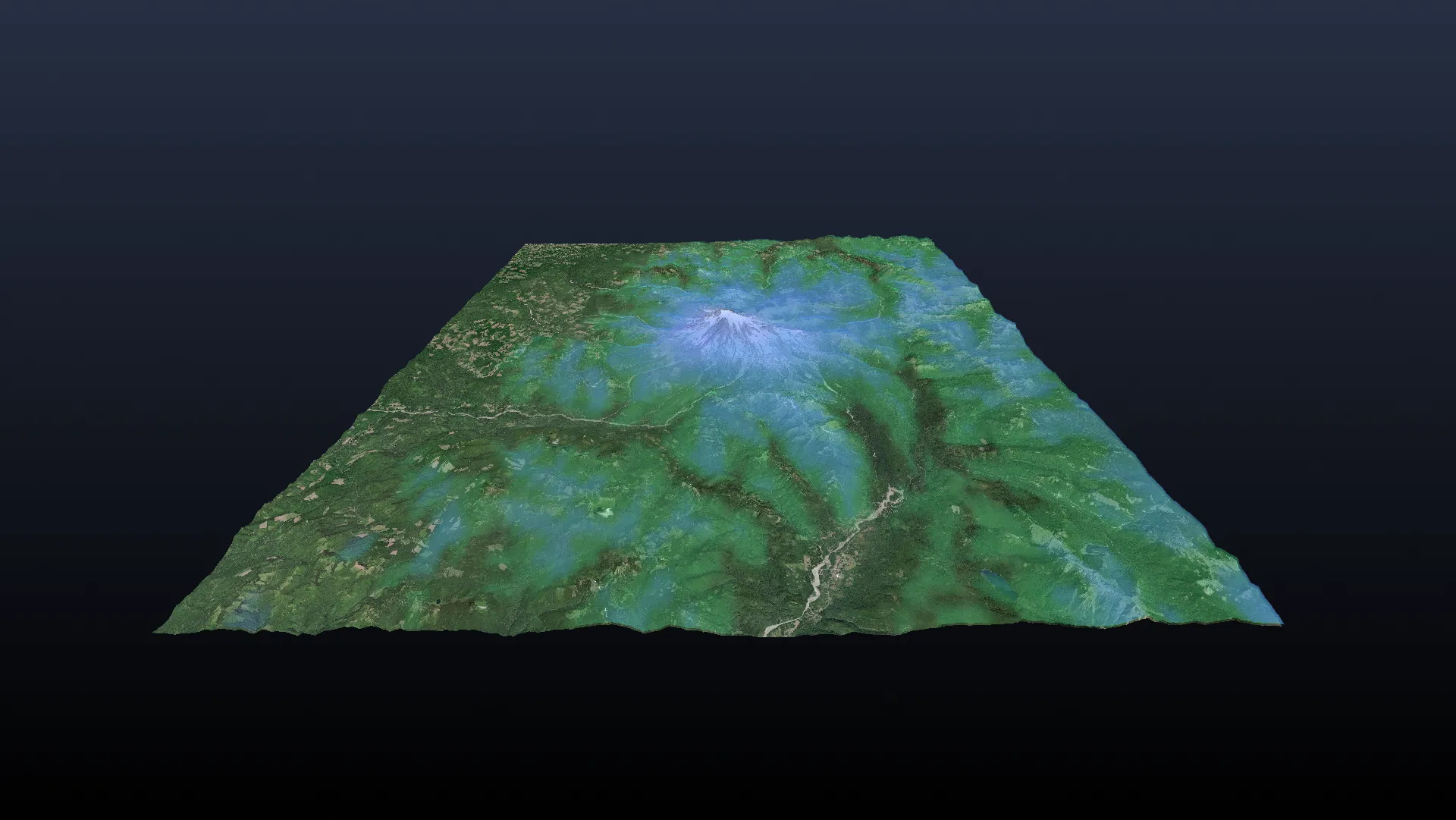
Habitat2100
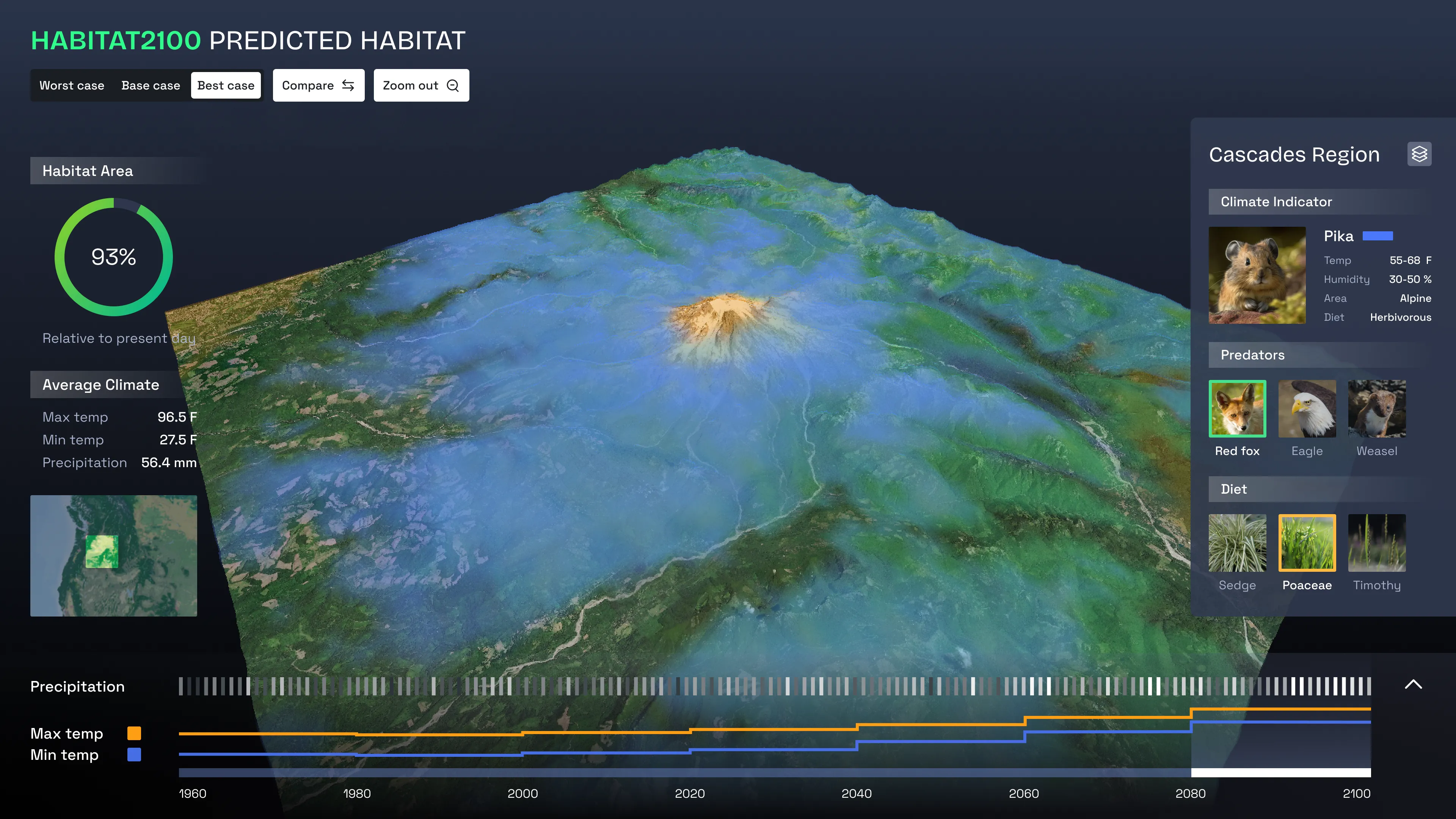
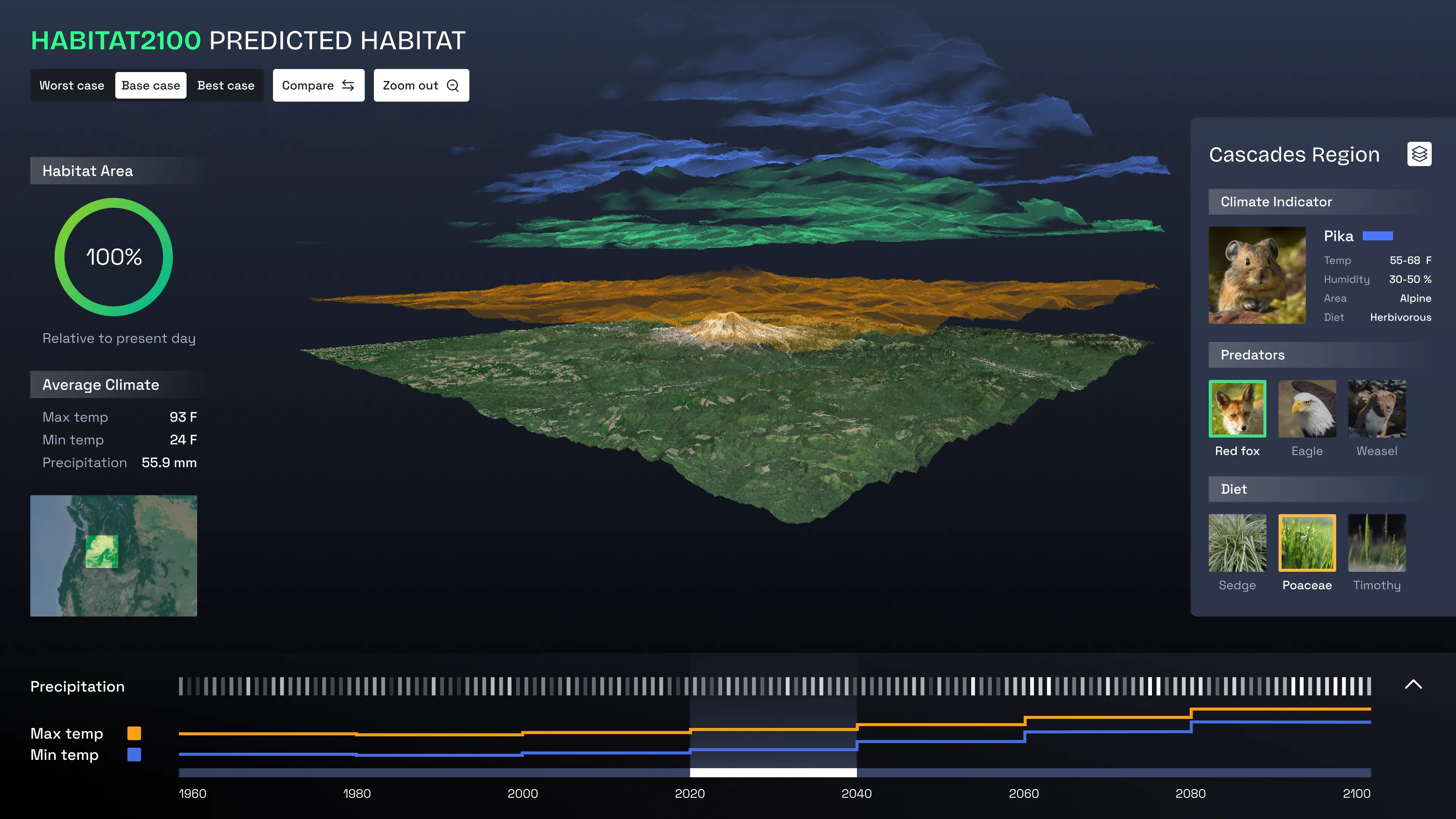
Habitat2100 is an interactive visualization tool that models how climate change might reshape where species can live. The system layers predictive habitat heatmaps onto an interactive 3D terrain, synthesizing climate projections, species occurrence data, and habitat modeling to show how ecosystems shift under different future scenarios.
Motivation
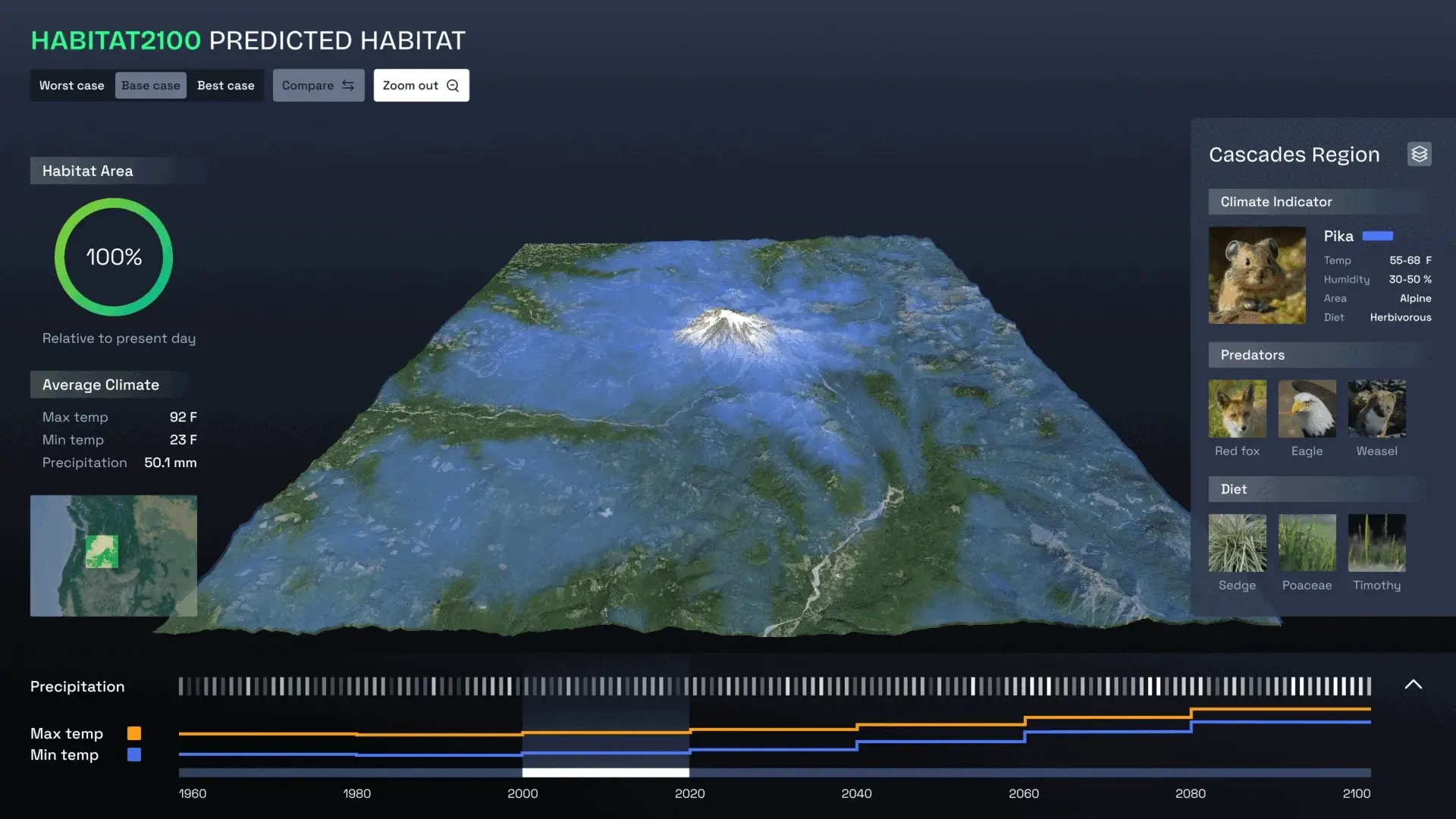
A pika losing its range is easy enough to plot. What that does to the plants it grazes and the raptors that hunt it is the part that goes missing. Habitat2100 models those dependencies together, starting with the American pika (Ochotona princeps) in North America's Cascades.
Ecological Modeling
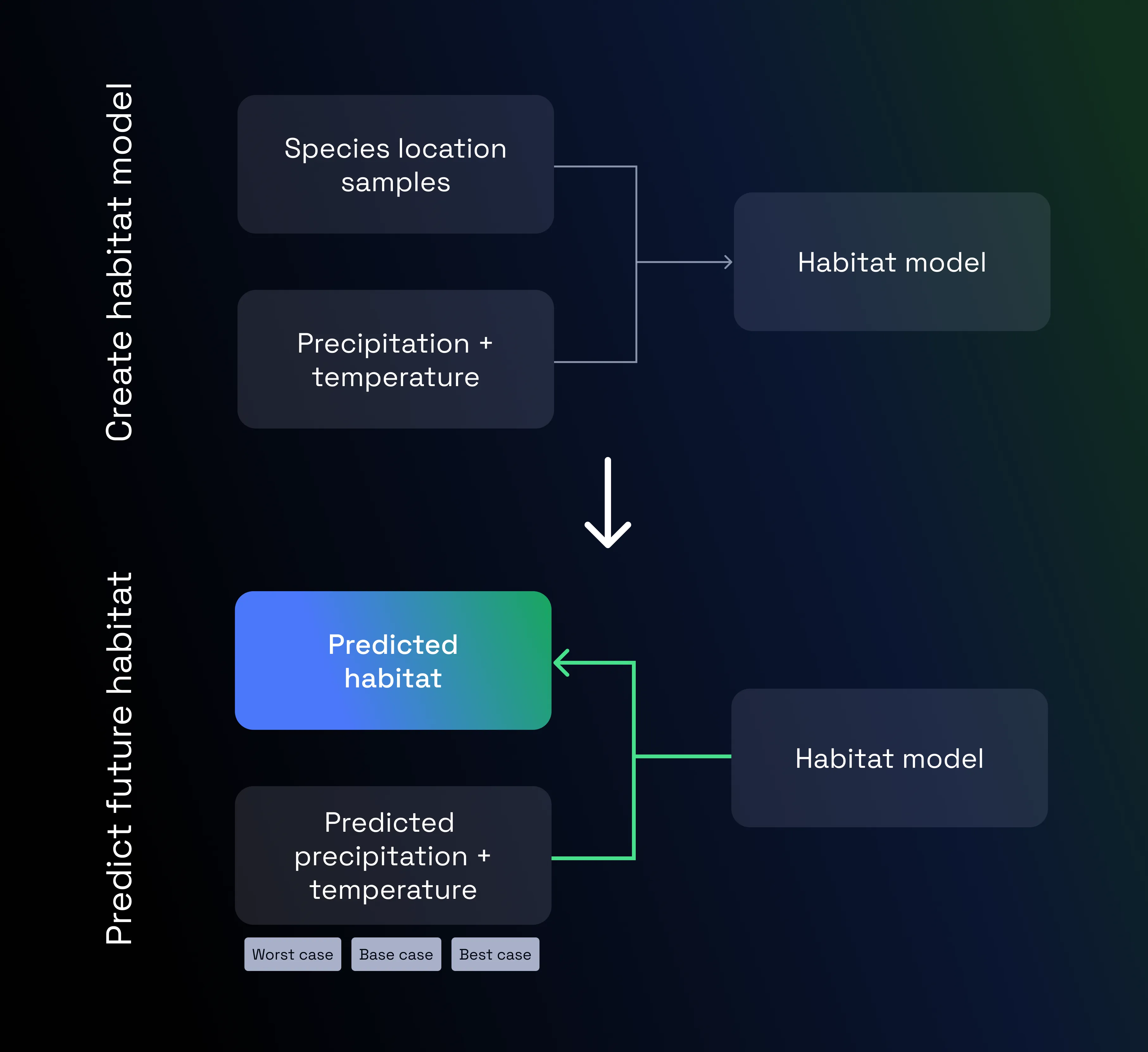
The predictive model (Maxent) is trained on 50 years of historical climate data and species occurrence records, forecasting habitat suitability in 20-year intervals out to 2100. It draws from NASA climate projections across three scenarios (optimistic, moderate, and worst-case) to show the range of possible futures.
Interactive Analysis
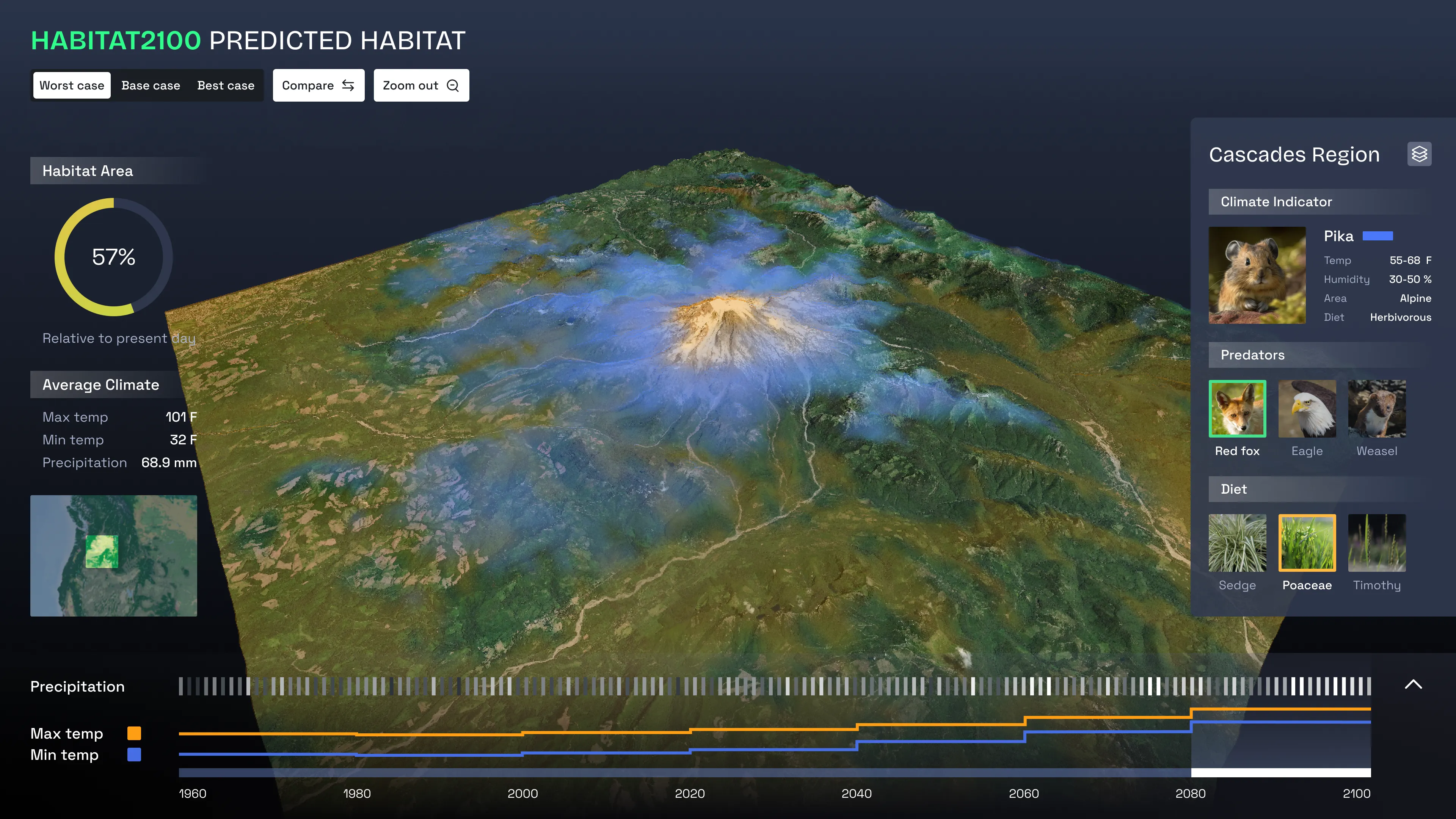
Translucent heatmaps are superimposed on a 3D terrain, with distinct colors per species and opacity indicating suitability probability. Users can scrub through time periods, switch climate scenarios, toggle species layers, "explode" layers vertically for inspection, or compare two scenarios side-by-side, making it possible to ask questions like where a species' range might overlap with a predator's habitat under worst-case warming.