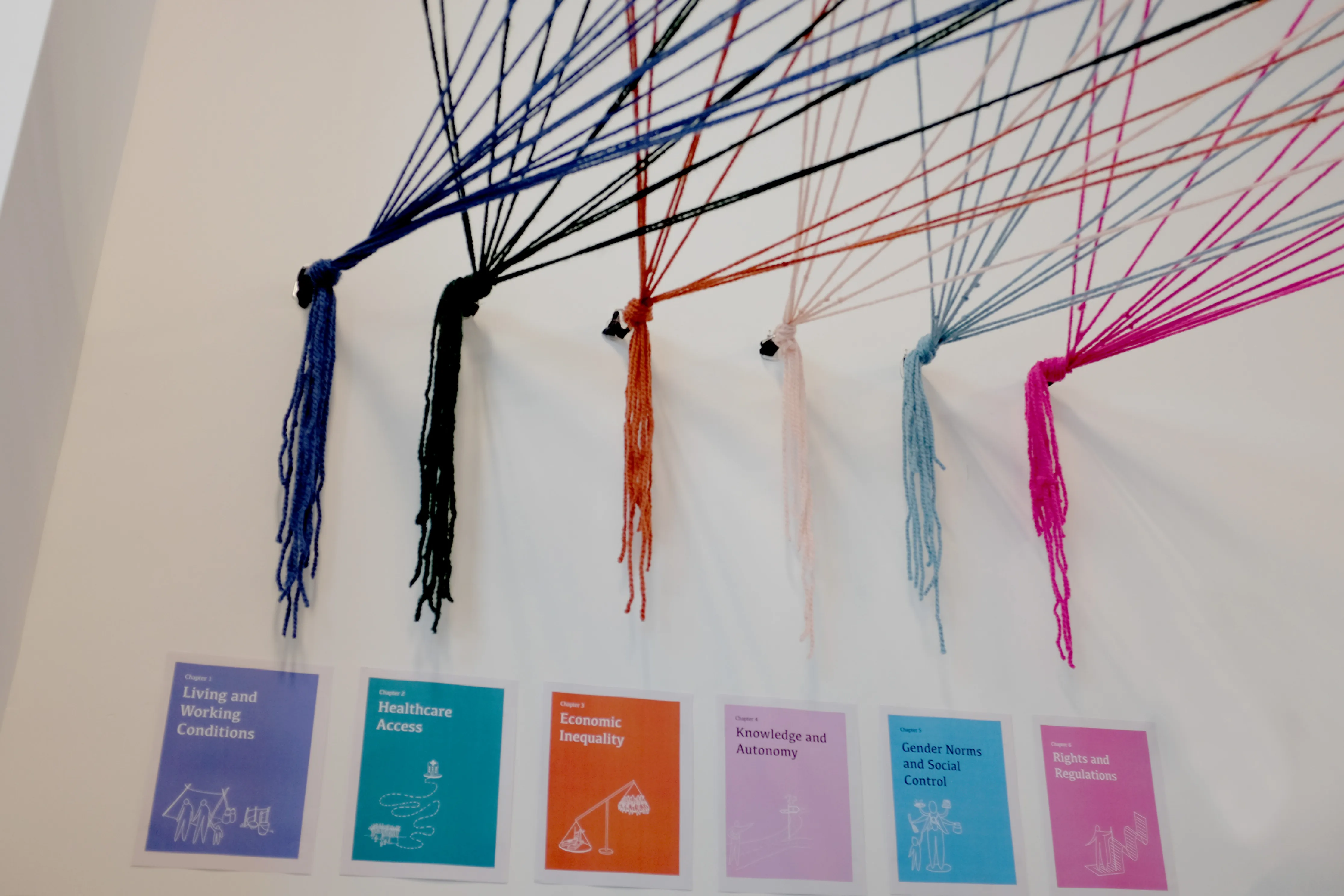
Project Disha addresses the crisis of preventable hysterectomies among migrant sugarcane harvesters in Maharashtra, India. Nearly 1.5 million people migrate annually for the harvest, working 16-hour days in poor conditions. Women face immense pressure to work without interruption, and menstruation is often seen as a barrier to income — leading to high rates of medically unnecessary hysterectomies in women as young as their 20s. Rather than prescribing a single solution, the project produced a field guide that equips local organizations to understand the system and develop their own context-specific interventions.
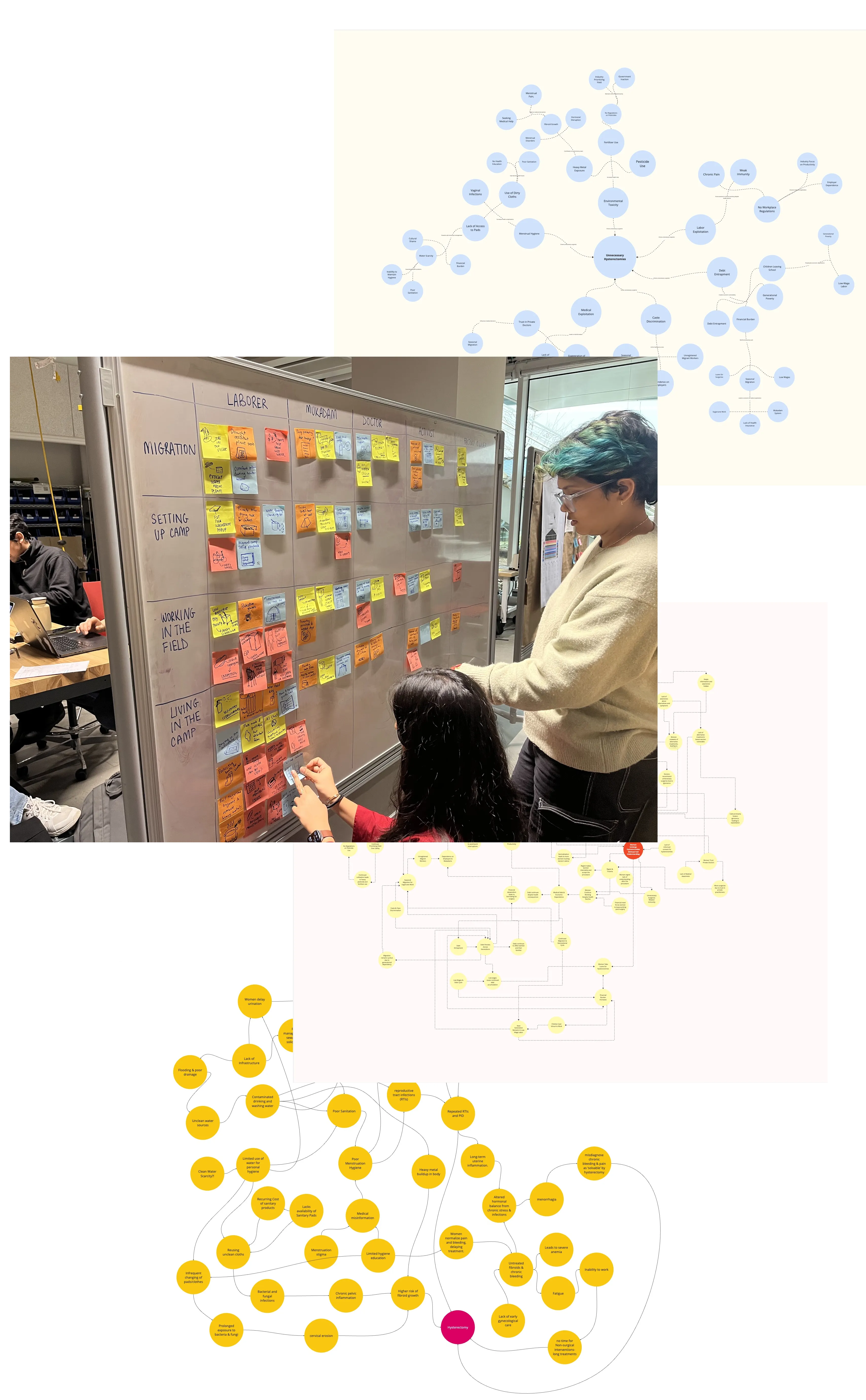
Systems maps created during our research.
Research & Systems Analysis
Through interviews with journalists, activists, healthcare experts, academics, and sugarcane laborers, we mapped the web of interconnected factors driving the crisis — from poor healthcare access and sanitation to exploitative labor practices and gender norms. The key insight: no single intervention could address a problem this deeply embedded in the region's socio-economic fabric.
From Solution to Empowerment
Instead of designing a single intervention, we focused on creating a tool for the local actors already working within the community. The guiding question: "How can we equip someone inside the system to intervene effectively and ethically?"
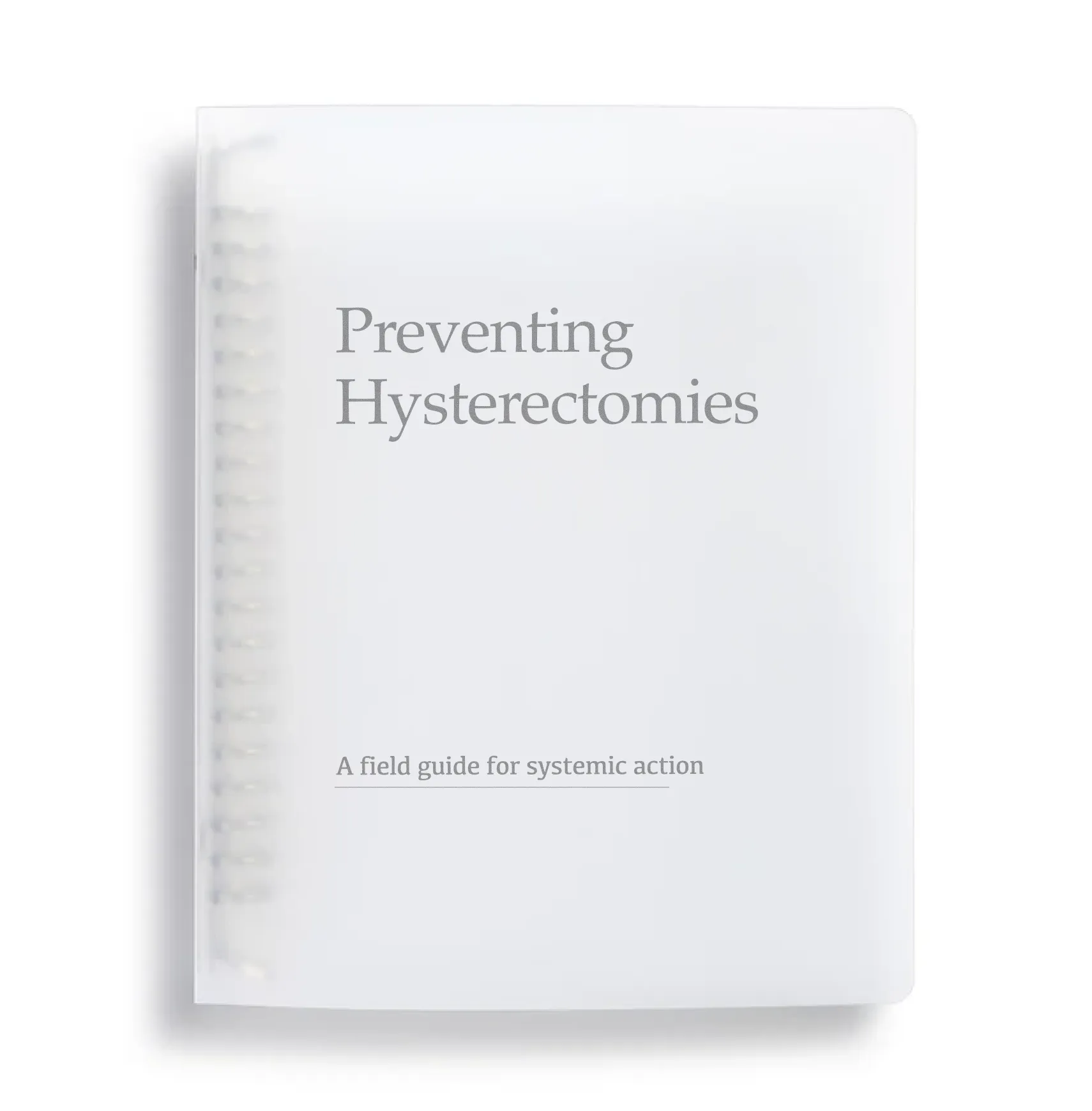
Cover of the Field Guide for Systemic Action.
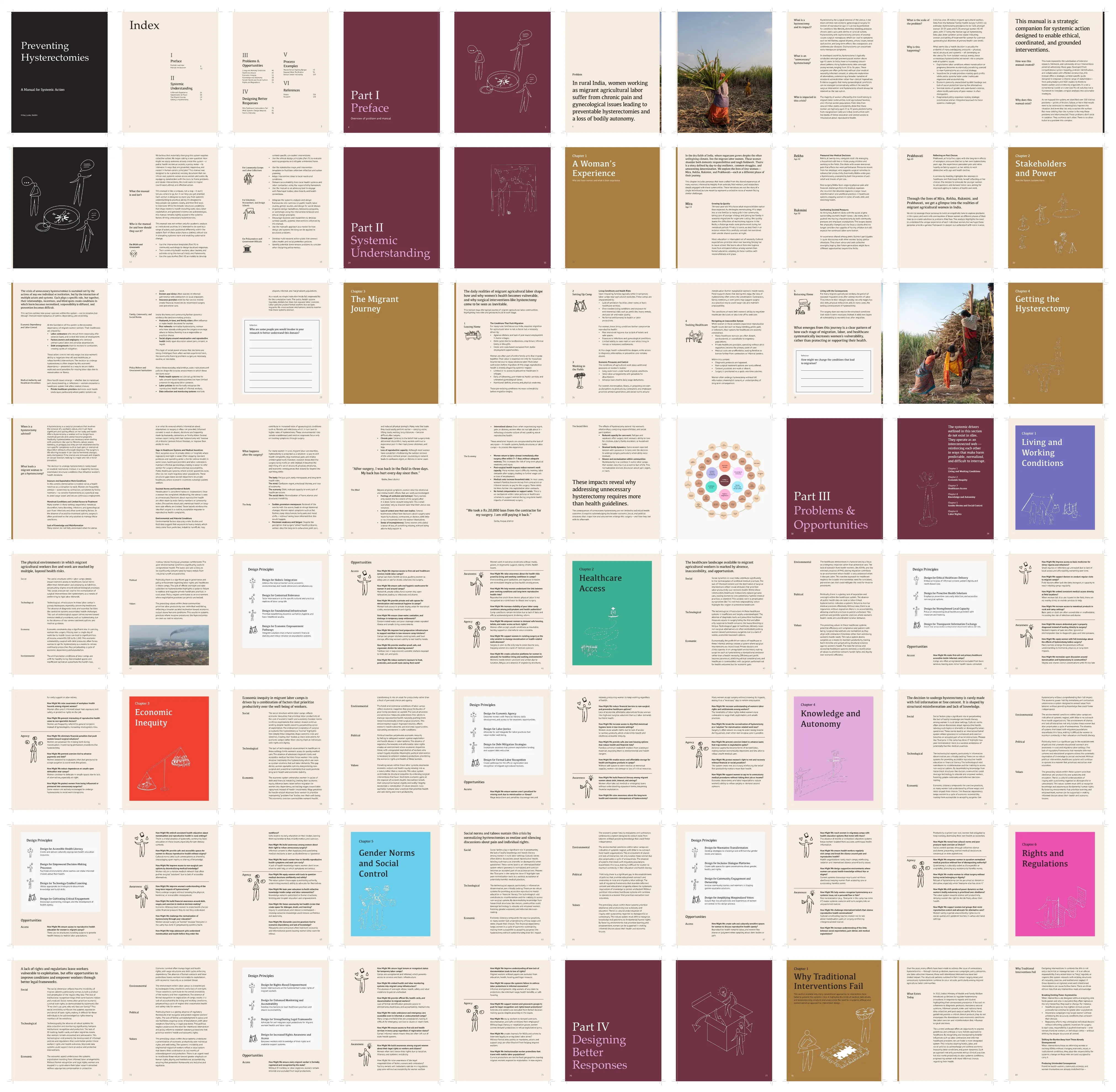
Internal spread of the Field Guide.
The Field Guide
The field guide is structured to move users from understanding to action across three sections: Systemic Understanding (personas, stakeholder maps, journey maps illustrating the pressures women face), Problems & Opportunities (leverage points across healthcare, economics, and gender norms), and Designing Better Responses (principles for ethical, phased intervention design).
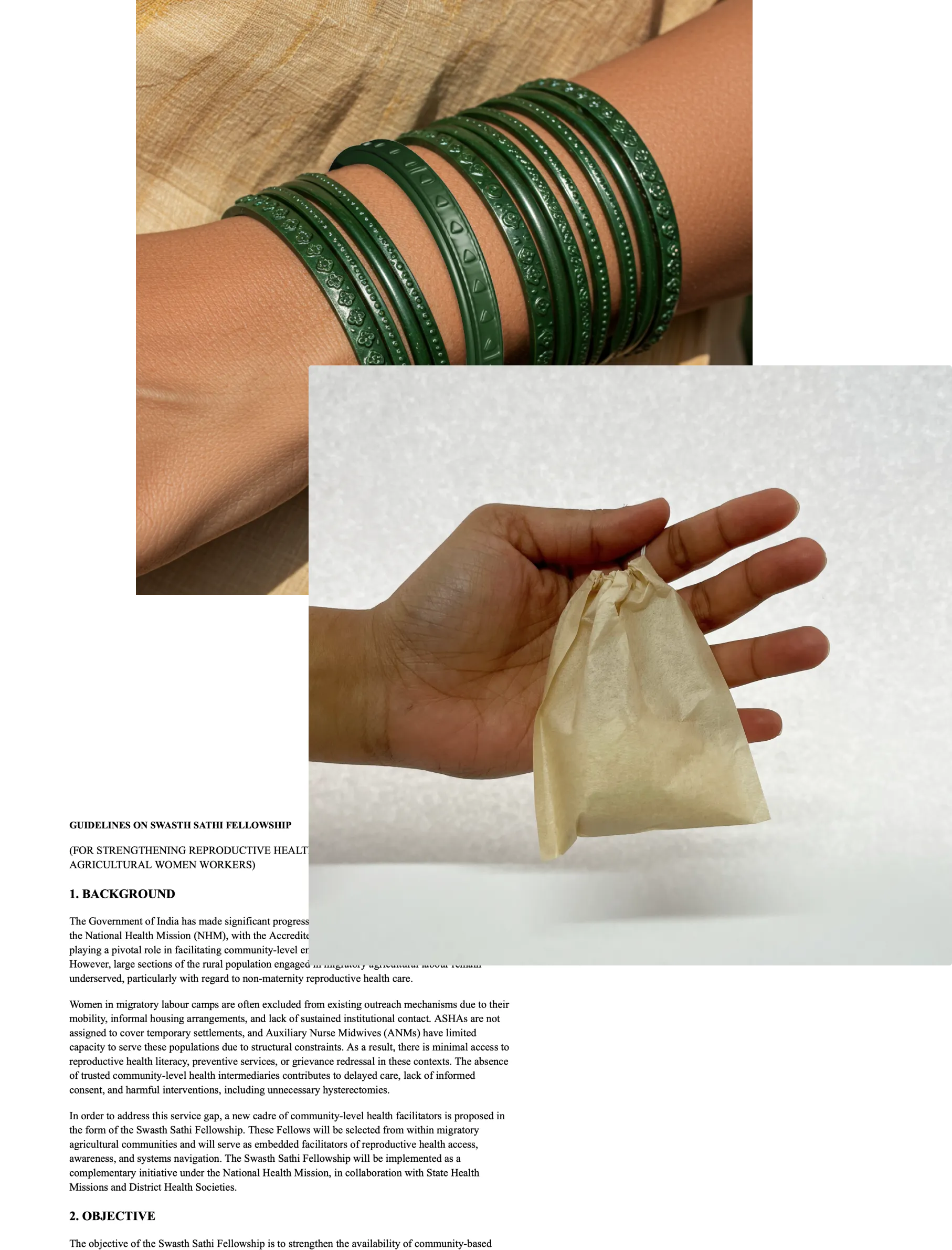
Illustrative concepts: Maasik period tracking bangle, bagasse water purification, Swasth Saathi Fellowship.
Illustrative Concepts
To show the guide's frameworks in action, it includes several illustrative interventions — a discreet period-tracking bangle addressing menstrual literacy, a low-cost water purifier using sugarcane waste to reduce heavy metal exposure, and a fellowship program training migrant women as in-camp health companions. These are starting points for community co-creation, not finished solutions.
Validation
The guide and its concepts were developed through engagement with local NGOs, UNDP representatives, and migrant workers in India. Community feedback directly shaped the work — for example, input from camp residents helped evolve the water purification concept into a teabag-like form suited to resource-constrained settings.
Get in touch for access to the Field Guide.
Organizations we engaged with in India.